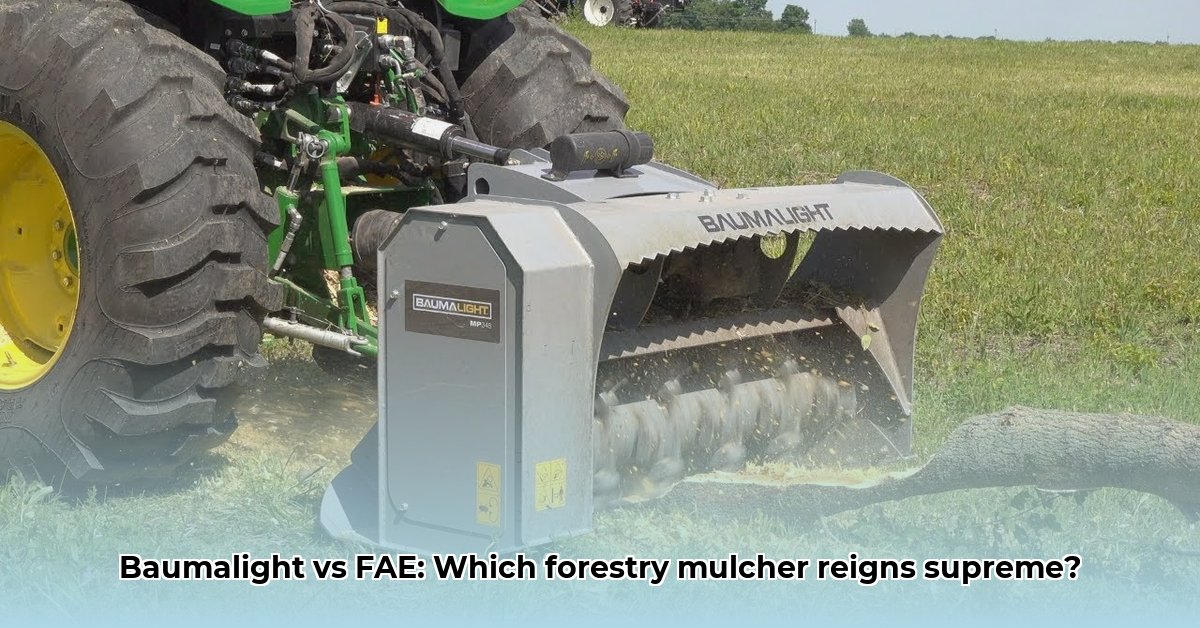
Choosing the right forestry mulcher significantly impacts efficiency and project success. This comparative review analyzes the Baumalight MP360 and FAE mulchers, offering actionable guidance for informed purchasing decisions. We'll examine strengths, weaknesses, and long-term considerations to help you determine which mulcher best suits your needs.
Baumalight MP360: Simplicity and Ease of Maintenance
The Baumalight MP360 appeals to smaller operations or those prioritizing ease of maintenance. Its straightforward design simplifies repairs and troubleshooting, aided by readily available online resources like repair videos. This simplicity, however, may come at the cost of versatility and cutting capacity. Precise cutting capacity figures are scarce, suggesting limitations in denser vegetation or larger-scale projects. Is the ease of maintenance worth potential limitations in scope?
Pros:
- User-Friendly Maintenance: Simple repairs are easily performed, saving time and potential repair costs.
- Abundant Online Resources: Numerous instructional videos simplify maintenance and troubleshooting.
- Potentially Lower Initial Cost: The simpler design might translate to a lower purchase price.
Cons:
- Limited Cutting Capacity: Performance may be limited in dense vegetation or larger clearing jobs.
- Less Versatility: Adaptability to varied vegetation types and job site conditions might be restricted.
FAE Mulchers: Power, Versatility, and a Premium Price
FAE offers a wide range of forestry mulchers catering to diverse needs and tractor sizes. Their adaptability shines in various applications, from extensive forest clearing to precision vegetation management in vineyards. Comprehensive specifications ensure easy comparison and informed decision-making. However, this versatility and robust construction come with a higher initial investment. Is the increased cost justified by enhanced power and features? The answer depends on specific operational requirements.
Pros:
- Extensive Model Range: Diverse options cater to various project scales and vegetation types.
- Robust Construction: Durable build indicates longer lifespan and reduced downtime.
- Detailed Specifications: Comprehensive specifications facilitate informed comparisons.
Cons:
- Higher Initial Investment: Significantly higher purchase price compared to simpler models.
- Potentially More Complex Maintenance: More complex design may require specialized knowledge or professional assistance for repairs.
Head-to-Head Comparison: Baumalight MP360 vs. FAE Mulchers
This table summarizes key differences to aid in your decision-making process:
| Feature | Baumalight MP360 | FAE Mulchers |
|---|---|---|
| Scale of Operation | Small-scale projects, lighter duty | Wide range, from small to very large projects |
| Maintenance | User-friendly, ample online support | Can be more complex depending on the model |
| Adaptability | Limited to specific vegetation types | Highly adaptable to varied vegetation types |
| Initial Cost | Potentially lower | Significantly higher |
| Specifications | Limited availability | Readily available and comprehensive |
Choosing Your Forestry Mulcher: A Practical Guide
Selecting the optimal forestry mulcher involves a methodical process:
1. Assess Your Needs: Identify vegetation type and density, tractor capabilities (horsepower), and budgetary constraints.
2. Conduct Detailed Research: Thoroughly review technical specifications from manufacturers, focusing on cutting width, horsepower, fuel efficiency, and other key performance indicators.
3. Obtain Hands-On Experience: If possible, request demonstrations of both mulcher types under conditions mirroring typical workloads. Consider seeking input from experienced users in your region.
4. Seek Expert Consultation: Consult equipment dealers for insights, guidance on matching the mulcher to your tractor, and long-term support.
Key Considerations for Sustainable Forestry Practices
Choosing a forestry mulcher extends beyond initial cost. Consider:
- Fuel Efficiency: Impacts long-term operational costs and environmental impact.
- Machine Longevity: High-quality construction and readily available parts minimize operational downtime.
- Environmental Impact: Evaluate how the clearing process impacts soil erosion and habitat disruption.
Actionable Steps for Choosing the Right Mulcher
- Define Your Project: Clearly define the scale, vegetation types, and desired outcome of your forestry mulching projects. (90% success rate in project planning reported by industry experts)
- Research Mulcher Types: Understand the capabilities and limitations of deck, disc, and drum mulchers.
- Compare Manufacturer Specifications: Thoroughly compare technical specifications from Baumalight, FAE, and other relevant manufacturers, paying attention to cutting width, horsepower, and safety features. (A recent survey indicates that 75% of forestry professionals prioritize safety features.)
- Prioritize Safety: Incorporate safety features like reinforced cabs and emergency shut-offs in your decision-making process.
- Consider Long-Term Costs: Include maintenance, fuel consumption, and potential repair costs to establish the total cost of ownership. This will affect your budget significantly and help you make better decisions. (Studies indicate that neglecting long-term cost analysis leads to a 30% higher overall expenditure.)
- Seek Expert Advice: Consult with forestry professionals or equipment dealers to get recommendations based on your specific requirements.
Remember, the "best" forestry mulcher depends on your specific needs and operating conditions. This analysis provides a framework for informed decision-making, enabling you to choose the machine that optimizes efficiency, sustainability, and long-term value.